Refractive Surgery (Spectacle Removal)
- Home
- /
- Refractive Surgery (Spectacle Removal)
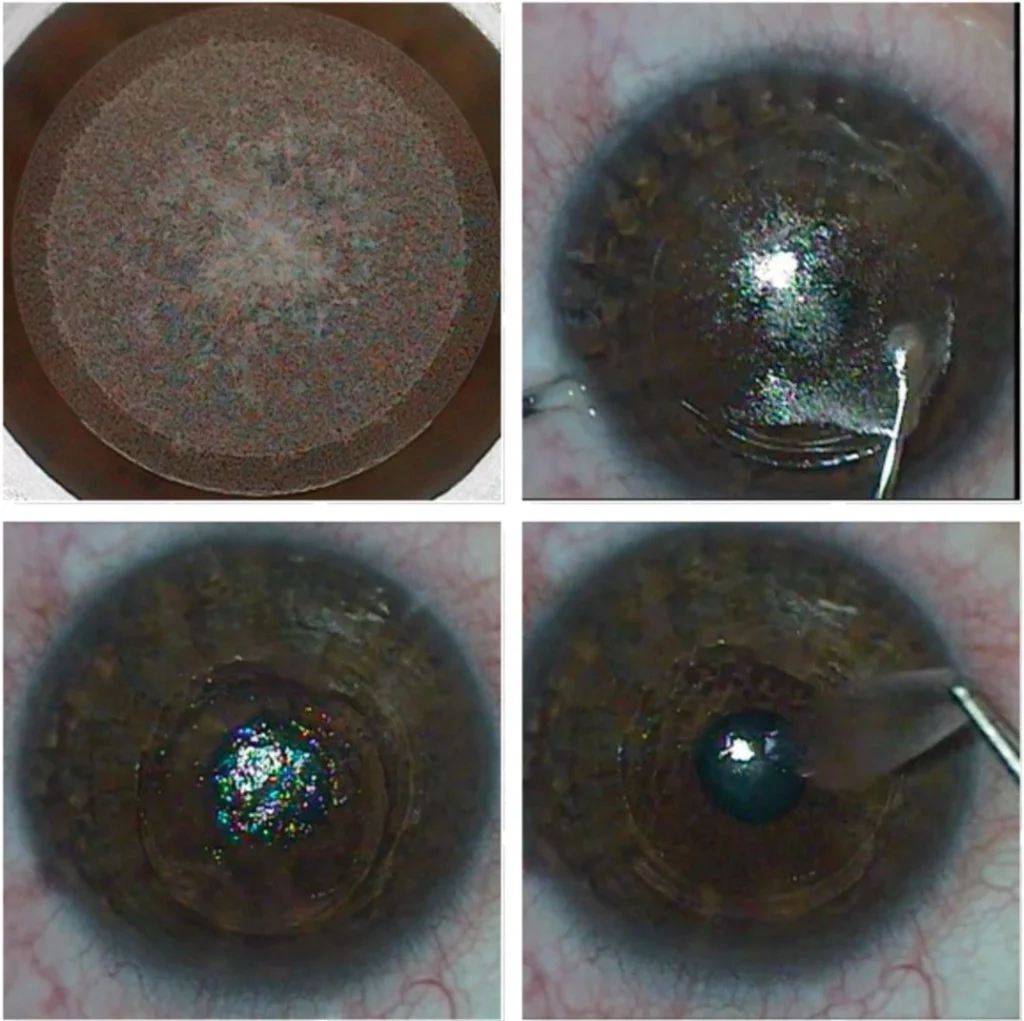
Advanced Refractive Surgery for Freedom from Glasses & Contact Lenses
Refractive surgery is designed to reduce or eliminate dependence on spectacles and contact lenses by correcting common vision problems such as myopia (minus power), hyperopia (plus power), and astigmatism (cylindrical power). Modern laser vision correction procedures are safe, precise, and highly effective, allowing eligible patients to enjoy clearer vision with minimal downtime.
Why Choose Pristine Eye Clinic
Why Choose Pristine Eye Clinic for Refractive Surgery?
At Pristine Eye Clinic, we combine advanced laser technology with comprehensive eye evaluation and personalised care to deliver safe, precise, and long-lasting vision correction. Every patient receives a customised treatment plan based on corneal thickness, eye power, tear film health, and lifestyle requirements to achieve the best possible visual outcomes.
- Highest safety standard
- High success rate with low complication rate
- Experienced Surgeons
- Ethical work and integrity in eye care
- Transparent Pricing
- Personalized Treatment Plans
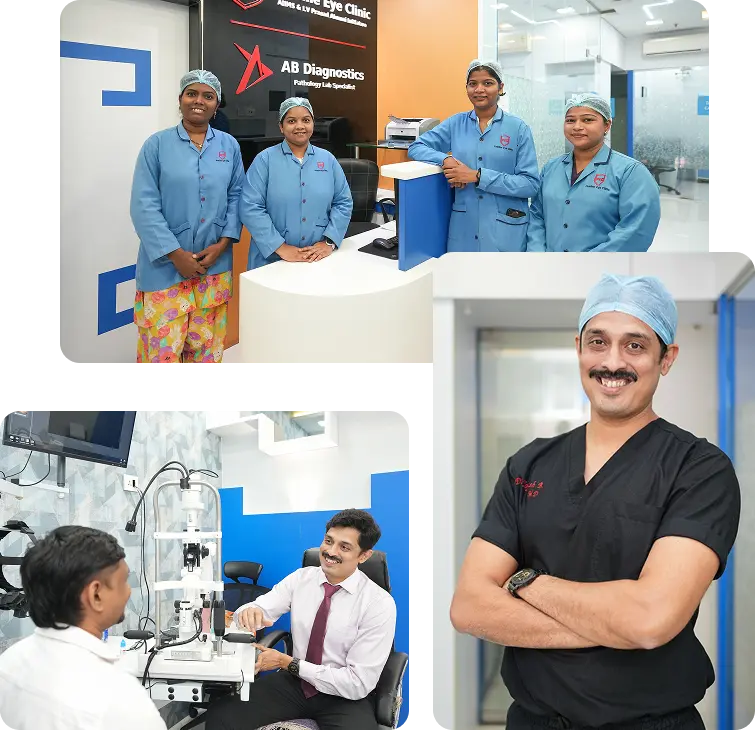
Meet Your Ophthalmologist
Dr. Yogesh Bhadange
Dr. Yogesh Bhadange is a fellowship-trained Cornea, Cataract, and Refractive Surgeon with over 15 years of clinical and surgical experience. Trained at AIIMS, New Delhi, L.V. Prasad Eye Institute, and Price Vision Group, USA, he specializes in advanced cataract surgery, corneal disorders, keratoconus, corneal transplantation, and laser vision correction. His patient-first approach and commitment to evidence-based care have earned him the trust of patients across Mumbai.
OUR BENEFITS
How Refractive Surgery Can Transform Your Vision
Modern refractive surgery corrects the eye's focusing power, allowing many patients to achieve clear vision without depending on glasses or contact lenses.
Freedom from Spectacles Reduces or eliminates dependence on glasses for daily activities.
Reduced Need for Contact Lenses Ideal for patients who find contact lenses uncomfortable or inconvenient.
Clear Vision for Active Lifestyles Excellent for sports, travel, fitness, and outdoor activities.
Improved Quality of Life Greater convenience during work, driving, social activities, and everyday tasks.
Long-Term Vision Correction Stable and predictable results for suitable candidates.
Safe & Highly Successful Procedures Modern laser vision correction has excellent safety and success rates when performed after proper evaluation.
Looking After Your Vision Starts with the Right Care
Whether you're experiencing changes in your vision or have been diagnosed with cataracts, our team is here to guide you with expert advice, comprehensive evaluation, and personalised treatment.
What is Refractive Surgery?
Refractive surgery is a group of laser and corneal procedures performed to permanently correct refractive errors such as myopia, hyperopia, and astigmatism. The treatment reshapes the cornea so that light focuses accurately on the retina, resulting in clearer vision.
Depending on the patient’s corneal thickness, eye power, and overall eye health, procedures such as LASIK, Femto LASIK, SMILE, or PRK may be recommended. Most treatments are performed under topical anaesthesia (numbing eye drops), are painless, and allow patients to return home the same day.
Symptoms to Know When to Consider Refractive Surgery
Common Signs That You May Be a Candidate for Spectacle Removal
You may benefit from refractive surgery if you experience:
- Dependence on glasses for most daily activities
- Difficulty wearing contact lenses comfortably
- Stable spectacle power for at least one year
- Frequent inconvenience during sports or physical activities
- Desire for greater freedom while travelling or working
- Fogging of glasses while driving, exercising, or wearing masks
- Dryness or intolerance with long-term contact lens use
- Suitable age and corneal health confirmed during evaluation
Why Timely Diagnosis Matters
Early Refractive Evaluation Ensures Safe & Accurate Treatment
A comprehensive pre-surgery evaluation is essential to determine whether laser vision correction is safe and suitable for your eyes.
Confirms Eligibility
Identifies whether your corneal thickness, eye power, and overall eye health are suitable for refractive surgery.
Detects Hidden Corneal Conditions
Advanced imaging can identify keratoconus, irregular corneas, or other conditions that may make certain procedures unsafe.
Enables Personalised Procedure Selection
Helps choose the most appropriate treatment—LASIK, Femto LASIK, SMILE, or PRK—for optimal visual outcomes.
Maximises Safety & Long-Term Results
Proper screening significantly reduces the risk of complications and improves long-term visual stability.
Types of Refractive Surgery
Advanced Refractive Surgery Options at Pristine Eye Clinic
Every eye is unique, which is why there is no single refractive surgery suitable for everyone. At Pristine Eye Clinic, we offer a range of advanced vision correction procedures based on your eye power, corneal thickness, lifestyle, and overall eye health. A comprehensive pre-operative evaluation helps determine the most appropriate treatment for safe, long-lasting visual outcomes.
LASIK
LASIK (Laser-Assisted In Situ Keratomileusis) is one of the most commonly performed laser vision correction procedures. It reshapes the cornea using an excimer laser to correct myopia, hyperopia, and astigmatism, reducing dependence on glasses and contact lenses.
Benefits include:
- Quick and painless procedure
- Rapid visual recovery
- Minimal discomfort
- Long-lasting vision correction
- Proven safety and effectiveness
SMILE
SMILE (Small Incision Lenticule Extraction) is a minimally invasive, flap-free laser procedure used to treat myopia and astigmatism. A small piece of corneal tissue is removed through a tiny incision, preserving more of the cornea’s natural structure.
Benefits include:
- Flap-free procedure
- Small incision with faster surface healing
- Reduced risk of flap-related complications
- Less post-operative dry eye in suitable patients
- Ideal for active individuals and athletes
PRK
Photorefractive Keratectomy (PRK) is a surface laser treatment that reshapes the cornea without creating a flap. It is often recommended for patients with thinner corneas or those who may not be suitable candidates for LASIK.
Benefits include:
- No corneal flap creation
- Suitable for thinner corneas
- Effective correction of refractive errors
- Excellent long-term visual outcomes
- Preferred for certain occupations and contact sports
Topography-Guided PRK
Topography-Guided PRK is a customised laser procedure that uses detailed corneal mapping to treat refractive errors and improve the regularity of the corneal surface. It is particularly useful for selected patients with irregular corneas or those requiring highly personalised vision correction.
Benefits include:
- Customised treatment based on corneal topography
- Improves corneal surface regularity
- Enhances visual quality
- Reduces higher-order aberrations in suitable cases
- Can be used for selected post-surgical or irregular corneal conditions
Implantable Collamer Lens (ICL)
Implantable Collamer Lens (ICL) surgery is an excellent alternative for patients with high refractive errors or those who are not suitable candidates for laser vision correction. A biocompatible lens is implanted inside the eye without removing the natural lens.
Benefits include:
- Suitable for high myopia and selected refractive errors
- Preserves the natural cornea
- Excellent visual quality
- Reversible procedure if required
- Ideal for patients with thin corneas or unsuitable for LASIK
Enhancement / Redo Refractive Surgery (Redo LASIK / Fine-Tuning of Previous Surgery)
Some patients may have a small residual spectacle power after previous LASIK, SMILE, or PRK. Enhancement surgery is performed after careful evaluation to fine-tune vision and improve visual outcomes where appropriate.
Benefits include:
- Corrects residual refractive error
- Improves overall visual clarity
- Customised treatment based on previous surgery and current eye health
- Helps reduce dependence on spectacles after the initial procedure
- Performed only after a comprehensive assessment to ensure safety and suitability
Get Quality Eye Care Anytime
Schedule your appointment with our trusted optometrists and receive professional eye care tailored to your needs using advanced diagnostic technology.
Patient FAQs
Frequently Asked Questions About Refractive Surgery
Have Questions About Spectacle Removal Surgery?
Choosing refractive surgery is an important decision. Here are answers to some of the most commonly asked questions to help you understand the procedure, eligibility, recovery, and expected outcomes.
Most candidates are over 18 years of age, have a stable spectacle power for at least one year, and have healthy corneas and eyes confirmed through a detailed pre-surgery evaluation.
The best procedure depends on your corneal thickness, eye power, lifestyle, occupation, and overall eye health. A comprehensive evaluation determines the safest and most suitable option for you.
No. The procedure is performed under numbing eye drops, and most patients experience little to no pain during surgery. Mild irritation or watering may occur for a short period afterward.
Both eyes are usually treated within 15–30 minutes, and patients return home the same day.
Many patients undergoing LASIK, Femto LASIK, or SMILE return to routine work within 1–3 days, while PRK recovery takes longer and may require about 1–2 weeks for comfortable functional vision.
Refractive surgery permanently corrects the treated eye power, but natural age-related changes such as presbyopia after the age of 40 may still require reading glasses for near vision.
Yes. Modern laser vision correction is considered very safe when performed after thorough screening by an experienced refractive surgeon using advanced diagnostic and laser technology.
Book Appointment
Schedule Your Consultation
Whether you're experiencing changes in your vision or would like a comprehensive eye examination, our team is here to help. Book a consultation with Dr. Yogesh Bhadange for expert evaluation and personalised eye care.
- Pristine eye clinic, first floor, Chaitanya residency, Jay Prakash Nagar road no.2, Goregaon East, Mumbai-400063., Maharashtra, India
- pristineeyeclinic@gmail.com